📐 Need Architectural Cable Mesh for Your Project?
Get expert guidance on material selection, custom specifications, and competitive pricing from certified manufacturers.
Get a Quote Now →📧 Or email us directly: info@ropemesh.com
📋 Executive Summary
Architectural cable mesh (also called stainless steel cable mesh or wire rope mesh) is a high‑performance building material made from woven stainless steel wire ropes. Unlike standard wire mesh, cable mesh uses cables in the warp direction – offering superior flexibility, tensile strength, and a signature diamond‑shaped open area that allows natural light and ventilation. Available in 304 and 316 stainless steel grades, with cable diameters from 1.0mm to 5.0mm and mesh openings from 10mm to 300mm, architectural cable mesh serves facade cladding, balustrade infill, stair railings, green wall systems, and interior partitions. Leading manufacturers like BMP have been producing these meshes since 2006 with CE and ROHS certifications, exporting 90% to Europe, Australia, and the USA. This guide covers material selection, installation methods, cost factors, and supplier evaluation – everything you need to specify architectural cable mesh with confidence.
What Is Architectural Cable Mesh?
Definition and Core Structure
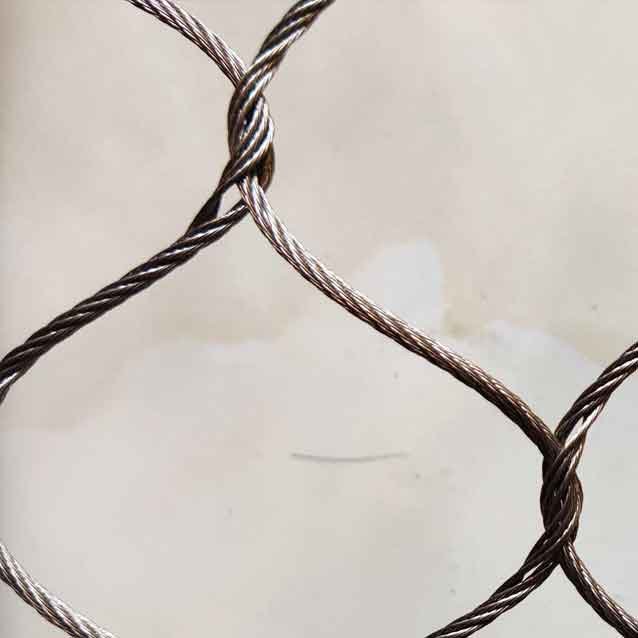
Architectural cable mesh—also known as stainless steel cable mesh or wire rope mesh—is a woven material constructed using cables (wire ropes) in the warp (vertical) direction and rods or cables in the weft (horizontal) direction. This unique construction gives the mesh flexibility along the cable direction while maintaining structural stability across the rods. The result is a fabric-like material that can wrap around unusually shaped structures while retaining high tensile strength.
How Architectural Cable Mesh Differs from Standard Wire Mesh
The critical difference lies in the vertical components. Architectural cable mesh uses cables (stranded wire ropes) rather than solid wires, offering greater flexibility and impact resistance. Cable mesh typically costs $30–$35 per square foot compared to $20–$25 for standard wire mesh—a premium justified by superior durability, aesthetic appeal, and longevity. Additionally, cable ends must be welded or fitted with ferrules to prevent fraying, whereas wire mesh can be cut and terminated more simply.
Key Material Specifications and Technical Parameters
Stainless Steel Grades: 304 vs. 316 vs. 316L
Architectural cable mesh is manufactured in three primary stainless steel grades:
| Grade | Corrosion Resistance | Best Application |
|---|---|---|
| 304 | Good | Indoor applications, mild environments |
| 316 | Excellent | Coastal areas, marine environments |
| 316L | Superior (low carbon) | Harsh chemical exposure, extreme conditions |
Grade 316 contains molybdenum, providing enhanced resistance to chlorides and salt—making it the preferred choice for exterior facade cladding in coastal regions. Manufacturers like BMP offer all three grades with CE and ROHS certifications.
Cable Diameter, Mesh Opening, and Open Area
Architectural cable mesh specifications vary widely:
| Parameter | Range | Common Values |
|---|---|---|
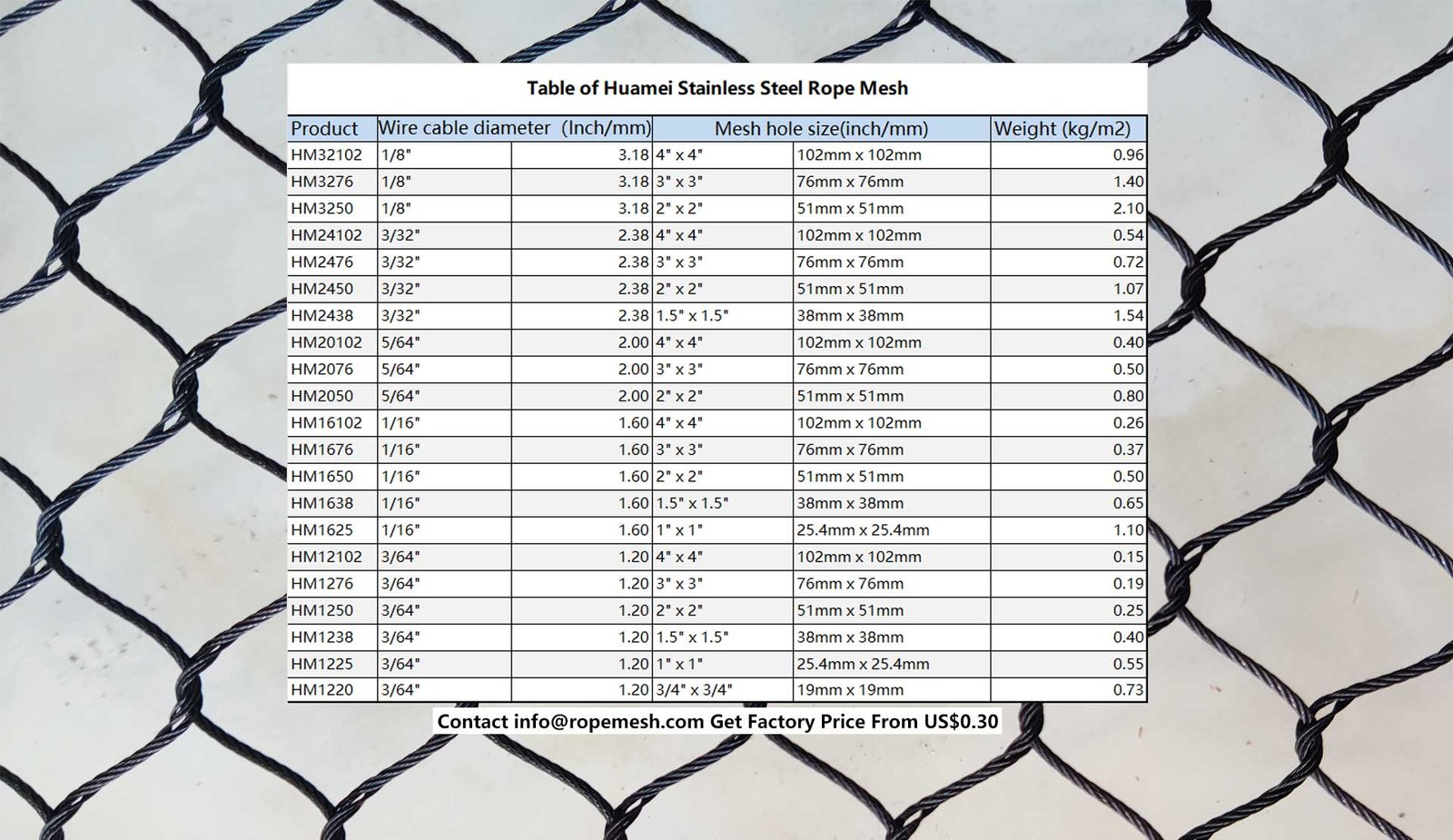
| Cable Diameter | 1.0mm – 5.0mm | 1.5mm, 2.0mm, 3.0mm |
| Mesh Opening | 10mm – 300mm | 40×70mm, 50×90mm, 60×104mm, 80×140mm |
| Cable Structure | 7×7 or 7×19 | 7×7 (stiffer), 7×19 (more flexible) |
| Mesh Angle | 60 degrees | Rhombus / diamond shape |
Open area—the percentage of void space—typically ranges from 45% to 66%, directly affecting light transmission, visibility, and ventilation.
Weight and Load-Bearing Capacity
Weight ranges from approximately 5.2 kg/m² to 10.2 kg/m², depending on cable diameter, weave pattern, and density. Despite being lightweight, the mesh offers exceptional tensile strength—capable of withstanding heavy loads and impacts. The rhombus mesh structure is virtually indestructible, most impact‑resistant, and resistant to rain, snow, and hurricane‑force winds.
Applications of Architectural Cable Mesh
Exterior Facade Cladding
Architectural cable mesh is extensively used for building envelopes, curtain wall systems, and sun protection screens. The mesh creates a modern, sleek aesthetic while providing solar shading and natural ventilation. Products like ferrule‑type mesh are specifically designed for bridge cladding and building facade trellis systems.
Interior Design and Partitions
Inside buildings, architectural cable mesh serves as ceiling linings, wall cladding, space dividers, and decorative screens. Its diamond‑shaped structure allows light to pass through, creating minimal obstruction to vision and an appealing landscape.
Safety and Security Applications
For balustrade infill, stair railings, bridge cladding, and parapet protection, architectural cable mesh provides excellent fall protection while maintaining transparency. The mesh is also used for suicide prevention systems and skylight protection.
Specialized Installations
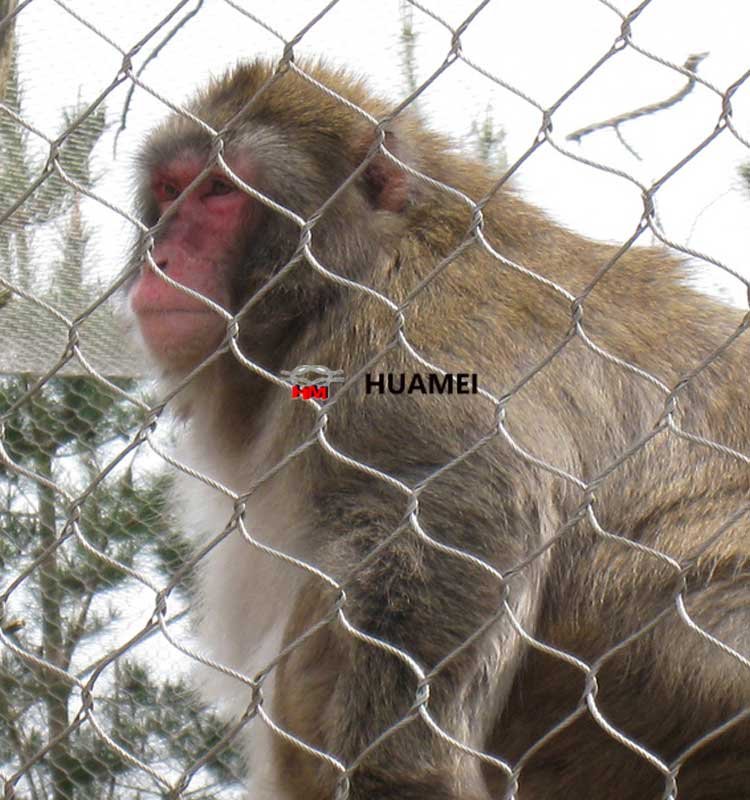
Beyond conventional architecture, architectural cable mesh is used for zoo enclosures, green wall trellises, parking garage screens, fire escape cladding, and even artwork installations.
How to Select the Right Architectural Cable Mesh for Your Project
Assessing Environmental Exposure
Start by determining where the architectural cable mesh will be installed. Indoor applications can use grade 304 stainless steel. Outdoor installations—especially in coastal or polluted environments—require grade 316 or 316L for corrosion resistance.
Determining Aesthetic and Performance Requirements
Consider the desired transparency, light filtration, and visual texture. Smaller mesh openings (e.g., 25×25mm) provide denser visual screening, while larger openings (e.g., 100×100mm) maximize transparency and ventilation.
Matching Weave Pattern to Application
There are two primary types of architectural cable mesh:
| Type | Construction | Best For |
|---|---|---|
| Knotted Mesh | Plain weave; each warp cable crosses alternately above and below each weft cable | General architecture, animal enclosures |
| Ferruled Mesh | Cables combined with ferrules (same‑grade stainless steel) | High‑end facades, balustrades, bridge applications |
The ferrule type is more commonly used in architectural applications like balustrades on bridges and staircases.
Compliance and Certification
Ensure your architectural cable mesh supplier provides general building approval (abZ) and certifications such as CE and ROHS. Reputable manufacturers will offer test reports for tensile strength, corrosion resistance, and material composition.
For zoo and animal facilities requiring durable, safe enclosures, see our zoo enclosures page for professional-grade solutions.
Installation Methods and Best Practices
Substructure Preparation
Proper installation of architectural cable mesh begins with substructure preparation. Pre‑drill mounting holes into galvanized angles before on‑site installation to ensure accurate alignment. Measure the installation area accurately to determine required mesh dimensions.
Frame Mounting Techniques
Architectural cable mesh can be mounted using clips, ties, or welding. Frame materials include wood, metal, and aluminum. Start installation in one corner of the frame, threading the assembly cable through horizontal and vertical ferrules.
Tensioning and Securing the Mesh
Step‑by‑step process:
- Secure corners first
- Place intermediate ty‑raps or clips
- String cables through ferrules
- Apply even tension across the panel
- Trim excess mesh with wire rope cutters
Common Installation Pitfalls to Avoid
Avoid misaligned mounting holes, improper tensioning, and panel overlapping. Use appropriate cutting tools to maintain the integrity and strength of the architectural cable mesh.
Quality Assessment and Supplier Evaluation
Material Quality Verification
When evaluating architectural cable mesh suppliers, verify the stainless steel grade and, for galvanized options, the zinc coating thickness. Request material test certificates.
Weaving Uniformity and Structural Integrity
Inspect the architectural cable mesh for consistent pattern and absence of irregularities. High‑quality mesh should have uniform openings and straight cables.
Tensile Strength Testing
Request tensile strength test reports from suppliers. Understand the maximum stress ratings for your specific application.
Red Flags When Evaluating Suppliers
- Lack certifications (CE, ROHS, ISO)
- Cannot provide test data or material specifications
- Offer vague product descriptions
- Have no project references or customer testimonials
Cost Considerations and Budgeting
Price Range and Influencing Factors
How much does architectural cable mesh cost per square meter? Prices typically range from $20 to $50 per square meter, depending on:
| Factor | Impact on Price |
|---|---|
| Material grade | 316 > 304 |
| Cable diameter | Thicker = higher cost |
| Mesh opening | Smaller = more material = higher cost |
| Order volume | Bulk orders reduce per‑unit cost |
| Customization | Custom sizes/colors add cost |
Total Cost of Ownership
While the initial cost of architectural cable mesh may be higher than alternative materials, the total cost of ownership is remarkably low. The mesh requires no special coatings or ongoing treatments. With a lifespan of 20 to 50 years, the long‑term value is exceptional.
MOQ and Lead Time Expectations
Minimum order quantities (MOQ) for architectural cable mesh typically range from 10 to 50 square meters. Lead times vary by manufacturer—some offer 5–8 work days, while custom orders may require 15+ days.
Maintenance and Longevity
Expected Lifespan
Under normal conditions, properly installed architectural cable mesh lasts 20 to 50 years. Indoor installations achieve the longest service life, while coastal environments may require grade 316 stainless steel for maximum durability.
Cleaning and Routine Care
Architectural cable mesh requires minimal maintenance. Occasional cleaning with mild detergent and water removes deposited particulate matter in polluted environments. The mesh is resistant to rust and corrosion.
Maintenance‑Free Advantages
One of the most compelling benefits of architectural cable mesh is its maintenance‑free nature. No painting, staining, or sealing is required—saving significant time and money over the product’s lifetime.
Sustainability and Environmental Benefits
Recyclable Materials
Architectural cable mesh is made from 100% recyclable stainless steel. At end of life, the material can be fully recycled without loss of quality.
Energy Efficiency
The high open area of architectural cable mesh promotes natural ventilation and daylight penetration. This reduces reliance on artificial lighting and mechanical cooling, lowering building energy consumption.
Contribution to Green Building Certifications
Architectural cable mesh contributes to LEED points through recycled content (typically 70% recycled material) and sustainable sourcing. The non‑toxic materials are safe for human health and the environment.
Invest in our zoo safety mesh and cut installation time thanks to lightweight, flexible panels.
✅ Key Takeaways
Frequently Asked Questions
What is the difference between architectural cable mesh and architectural wire mesh?
Cable mesh uses cables (ropes) in the warp/vertical direction, while wire mesh uses solid wires throughout. Cable mesh offers greater flexibility along the cable direction and requires welded ends or ferrules to prevent fraying, making it more expensive ($30–$35/sq. ft.) compared to wire mesh ($20–$25/sq. ft.).
How long does architectural cable mesh last?
Under normal conditions, properly installed architectural cable mesh lasts 20 to 50 years. Indoor installations with minimal corrosive exposure achieve the longest service life, while coastal or harsh environments may require grade 316 stainless steel for maximum durability.
Is architectural cable mesh suitable for exterior facades?
Yes. Architectural cable mesh is widely used for exterior facade cladding, curtain walls, sun protection screens, and parapet systems. Ferrule‑type mesh is specifically designed for building facade trellis systems and bridge cladding with certified general building approval (abZ).
How do I choose a reliable architectural cable mesh supplier?
Evaluate suppliers based on material certifications (CE, ROHS, ISO), tensile strength test reports, weave uniformity, ability to provide detailed shop drawings, and project references. Reputable suppliers like BMP have over 20 years of experience and export 90% of products to Europe, Australia, and the USA.
Does architectural cable mesh require ongoing maintenance?
Stainless steel architectural cable mesh is virtually maintenance‑free. It requires no special coatings or routine treatments. Occasional cleaning with mild detergent and water may be needed in polluted environments to remove deposited particulate matter.
📐 Ready to Specify Architectural Cable Mesh?
Get custom quotes, technical drawings, and material samples from certified manufacturers. Free consultation for commercial projects.
Get a Free Quote →🔗 Related Applications
Zoo Enclosures | Aviary Mesh & Bird Netting | Wildlife & Deer Fencing | Exotic Bird & Peacock Cages | Agricultural & Farm Fencing | Safety & Industrial Netting |