Need a primate habitat mesh quote?
Huamei Wire Mesh builds made-to-measure stainless steel rope mesh for zoos and sanctuaries. Send your drawing and get a spec sheet in 48 hours.
Get a primate mesh quote →📧 Or email us directly: info@ropemesh.com
Executive Summary
📌 Key Takeaways
- Start with the mesh, not the frame, when planning any primate space.
- Match cable diameter and aperture to the heaviest species in the group.
- A custom primate mesh habitat design saves money on hard or curved sites.
- Budget 30–45% of enclosure cost for the mesh package.
- Inspect seams monthly and wash with mild soap only.
A good primate mesh habitat design keeps monkeys, apes, and lemurs safe while letting keepers and visitors see the animals clearly. The mesh is the part of the enclosure that does the hardest work. It holds the perimeter, shapes the climbing space, and takes daily abuse from hands, feet, and teeth. This guide walks through the choices that matter, the numbers you should specify, and the steps that keep a build on schedule.
Stainless steel rope mesh is the standard for primate habitats because it resists chewing and climbing wear. Plan panel size, cable diameter, and aperture together — they decide both safety and cost. A custom primate mesh habitat design pays off when the space is irregular or the species is strong. Budget roughly 30–45% of total enclosure cost for mesh, hardware, and installation labor. Always confirm mesh against species-specific bar spacing before ordering.
Why Mesh Choice Drives the Whole Build
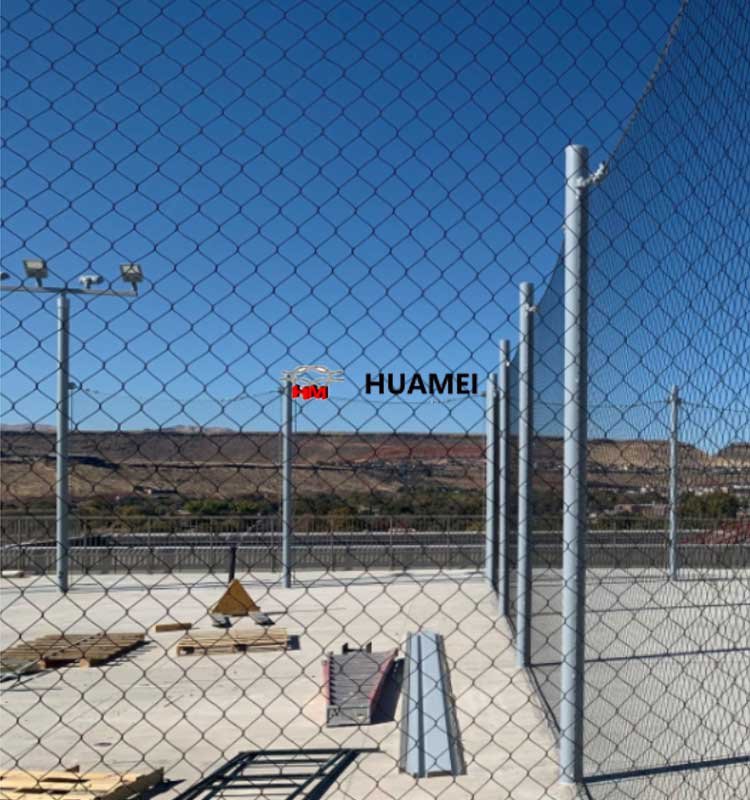
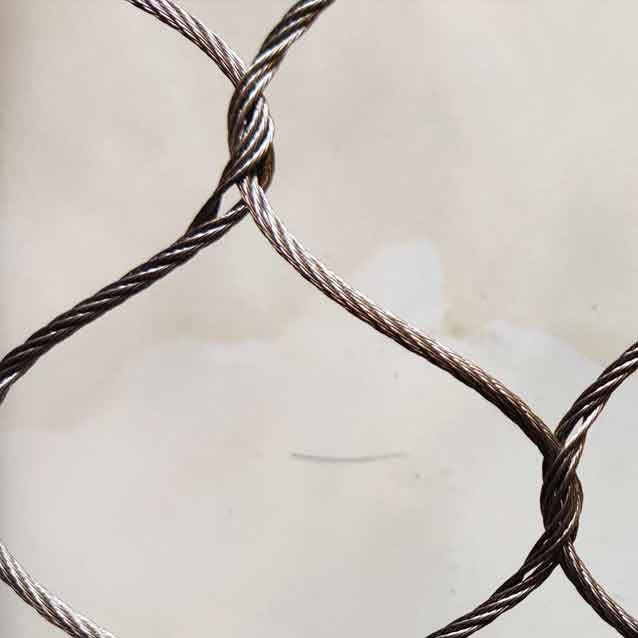
Primates test every surface. A weak panel becomes a gap, and a gap becomes an escape or an injury. That is why the best primate mesh habitat design starts with the mesh, not the frame. Stainless rope mesh bends but does not snap. It resists rust in humid tropical houses. And it stays open enough for light while tight enough to block a small hand.
When we talk about animal habitat quality, the mesh is where welfare and engineering meet. A well-chosen panel supports habitat enrichment because it can carry ropes, ledges, and browse without tearing. It also supports animal welfare by removing sharp edges and lead-based coatings from the animals' reach.
The cost of getting this wrong is not just a repair bill. An escape can close an exhibit for a season. An injury can end a breeding program. A worn panel that a keeper must climb to fix adds daily risk. That is the real reason a primate mesh habitat design deserves the same care as the life-support systems in the building. The mesh is not trim; it is the barrier between the animal and everything else.
Key Specifications to Lock Down
Before you draw a single line, set these numbers. They decide safety, looks, and price.
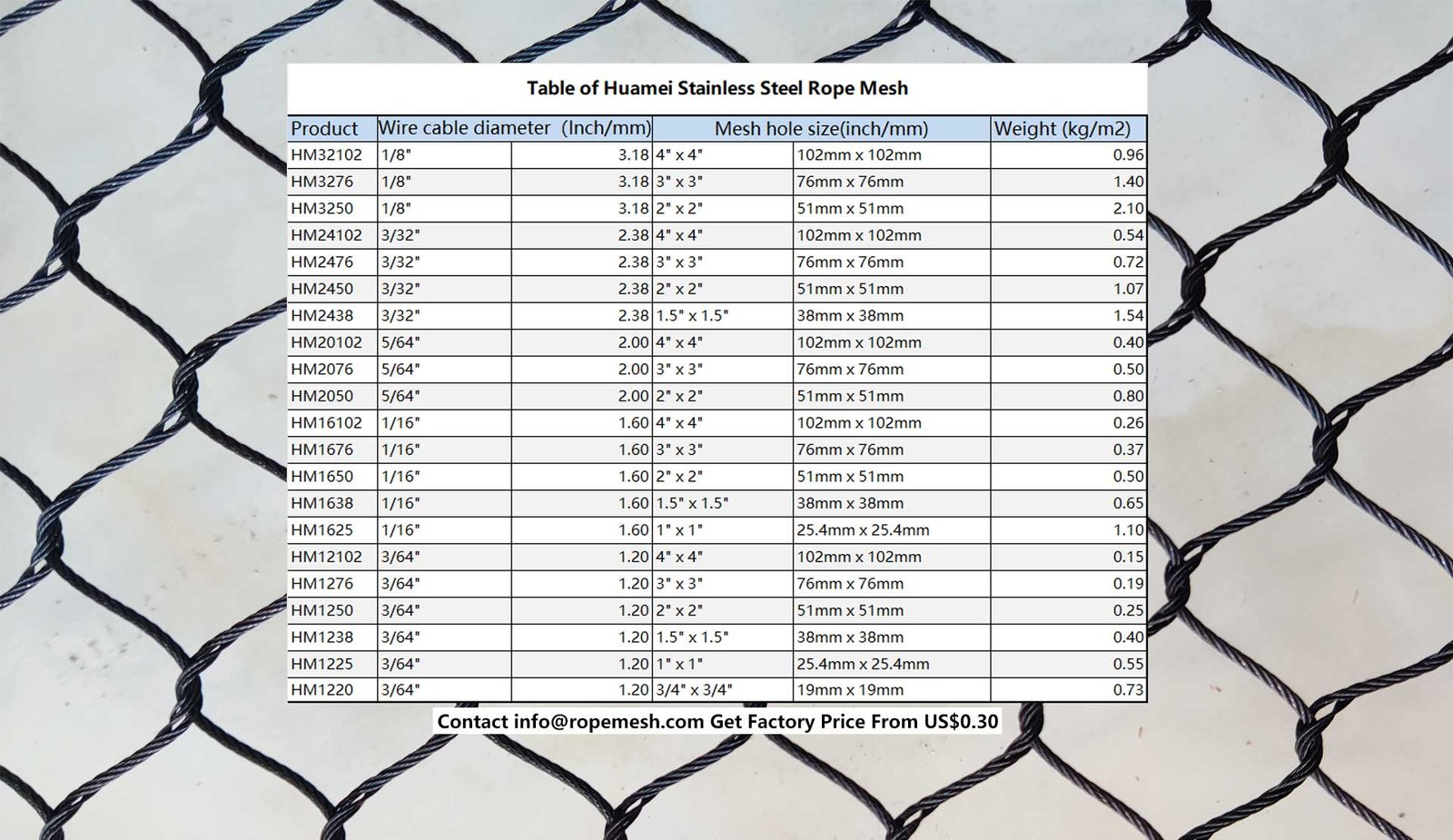
📋 Overview: This table provides a starting point for primate mesh specifications. Small primates (marmosets, tamarins) need tight apertures to prevent escape. Medium primates (macaques, guenons) are strong pullers requiring thicker cable. Large primates (chimps, orangutans, gorillas) demand the heaviest cable and robust framing.
Tip: A primate mesh habitat design specifications document should also list tensile strength, the ferrule type, and the anchor pattern. Keep that sheet with the build file so later repairs match the original.
Types of Mesh Layout
There is more than one way to hang the same roll of mesh. The primate mesh habitat design types you pick change how the space feels:
- Full wrap: mesh on all sides including roof. Best for free-flight rooms where birds and primates share space.
- Perimeter only: mesh on the outer wall, solid roof. Common for outdoor yards.
- Climb core: a mesh column or web in the middle that primates use as a jungle gym.
- Split level: two mesh tiers joined by a mesh ramp, doubling usable space in a small room.
Each layout changes the mesh panel count and the hardware load. A climb core, for example, needs extra top anchors because the animals pull down on it all day.
How to Plan a Safe Design
A practical primate mesh habitat design guide follows five steps:
- List the species and the heaviest adult weight.
- Set aperture so a hand cannot pass through but light and air can.
- Choose cable diameter from the table above.
- Draw panels to standard widths to cut waste.
- Mark every anchor point on the frame before fabrication.
Zoo safety reviews almost always start with these five items. Get them right and the rest of the zoo design moves fast.
Building the Habitat
When you how to build primate mesh habitat design structures, build the frame first and hang mesh second. Tension the mesh with a come-along, not by hand. Loose mesh sags, and sagging mesh catches feet. Over-tight mesh tears at the ferrules. Aim for a firm, even surface with no drumming when tapped.
Use stainless hardware only. Mixing mild steel bolts with stainless wire mesh invites galvanic rust that stains the panel and weakens the hold. Seal the frame ends so monkeys cannot peel back a ferrule with a fingernail.
Installation Notes
Field crews should how to install primate mesh habitat design panels in a set order: top row first, then work down, then tension the sides. This keeps the weave square. Leave a 10 mm overlap at every seam and clamp it. A durable primate mesh habitat design depends on those seams more than on the panel face.
Plan access for washing. Mesh that cannot be reached with a brush stays dirty, and dirty mesh spreads hair and disease between groups. Good primate mesh habitat design installation leaves a walkway on at least one side.
Cost Picture
A primate mesh habitat design cost estimate should separate three lines: mesh, frame, and labor. Mesh is priced by area and cable weight. Frame cost tracks the steel market. Labor varies most — a clean rectangular yard installs in days, while a curved free-flight room can take weeks.
Most zoos land between 30% and 45% of total enclosure budget on the mesh package. An affordable primate mesh habitat design is not the cheapest roll; it is the one with the fewest custom cuts and the simplest frame. Standard panel widths are your friend here.
Where to Source
When teams ask where to buy primate mesh habitat design materials, the answer is fewer places than you think. Look for a supplier that publishes tensile data, offers sample swatches, and cuts to your panel list. Huamei Wire Mesh does all three and ships to zoos worldwide. Ask for the species-specific aperture chart before you commit.
For welfare and enclosure mesh standards, the Association of Zoos and Aquariums publishes useful guidance on barrier design and inspection — see the AZA barrier guidelines for a professional reference (open in a new tab, external site).
Provides high-quality stainless steel rope mesh with factory price
Maintenance That Keeps It Safe
A primate mesh habitat design maintenance plan is short but non-negotiable:
- Inspect seams and ferrules every month.
- Wash with mild soap; never use chlorine bleach on stainless.
- Replace any panel that shows a stretched aperture.
- Log every repair with the date and the crew name.
This routine is what turns a good build into a ten-year build. The primate mesh habitat design benefits — clear views, safe climbing, low vet bills — only hold if the mesh stays tight.
Common Mistakes to Avoid
Most failed primate meshes fail the same way. The panel is fine; the edges and the plan are not. Watch for these:
- Wrong aperture for the smallest hand. Teams spec for the adult, then a juvenile slips a hand through. Always size for the smallest resident, not the largest.
- Mild steel near stainless. One rusty bolt stains a whole panel and starts a weak point.
- No access for washing. If a brush cannot reach it, staff will not clean it, and dirt builds.
- Hand tension only. Mesh hung by feel sags within a season. Use a come-along and a tension gauge.
- Skipping the species chart. A primate mesh habitat design guide is useless if it ignores who lives inside.
These errors are cheap to prevent and expensive to fix. They are also the first thing a reviewer flags during a zoo safety audit.
A Quick Species Reference
Different groups need different mesh. Use this as a sanity check before you finalize the spec:
- Marmosets and tamarins: small, light, and quick. Tight 25 mm aperture, thin 1.2 mm cable.
- Macaques and guenons: strong pullers. Move to 2.0–2.5 mm cable and 38 mm aperture.
- Gibbons: brachiators that swing hard. Full-wrap mesh with extra top anchors.
- Chimpanzees and orangutans: the heavy users. 3.0–4.0 mm cable, no climb-core panel they can deform.
- Lemurs: light but escape-prone. Seal every seam; they test edges constantly.
This reference is why a custom primate mesh habitat design beats a catalog panel for mixed-species houses. One size rarely fits a whole collection.
Detailed Inspection Checklist
A monthly walk counts only if you look at the right spots. Use this list:
- Ferrules at every seam — any that twist or lift?
- Top anchors — still tight, no rust creep?
- Aperture shape — any panel stretched past spec?
- Frame ends — capped and smooth, no peel point?
- Climb core — extra anchors holding, no sag?
- Walkway side — clear for washing and viewing?
- Logbook — last repair dated and signed?
Pair this with the simpler routine above and the primate mesh habitat design maintenance plan stays real, not theoretical.
Frequently Asked Questions
Ready to spec your primate mesh?
Send Huamei your site drawing and species list. We return a cut-to-size panel plan and a fixed quote.
Start your primate mesh project →📋 Ready to start your project?