🦁 Need the right mesh for your zoo enclosure?
Get expert guidance on material grades, aperture sizing, and installation — tailored to your specific animal species and environmental conditions.
Get a Quote Now →📧 Or email us directly: info@ropemesh.com
1. Introduction: The Revolution in Zoo Enclosure Design
📌 Key Takeaways
- Superior Strength: Stainless steel rope mesh withstands impacts from large predators with tensile strength reaching 1,770 N/mm² and breaking loads up to 9.04 KN
- Corrosion-Proof: Grade 316 stainless steel with molybdenum provides enhanced resistance to pitting and crevice corrosion, ideal for coastal and high-humidity environments
- Virtually Zero Maintenance: 30+ year service life with no painting, coating, or rust treatment — just occasional cleaning with water and mild detergent
- Invisible Transparency: Fine wire diameters and open apertures create near-invisible barriers that deliver unobstructed visitor sightlines
- Paw-Safe Design: Proper aperture sizing prevents paw entrapment — a critical safety metric for large predator exhibits
- Design Flexibility: Mesh can be shaped, curved, and tensioned to fit virtually any structural frame, including overhead netting and complex geometric transitions
- Two Primary Configurations: Plain weave (knotted) offers flexibility; ferrule connection (knotless) provides enhanced structural rigidity
- Grade Selection Matters: Choose 304 for inland zoos, 316 for coastal or high-humidity environments
- 100% Recyclable: Environmentally sustainable material that can be fully recycled at end of life
- Industry Standard: Endorsed by WAZA and trusted by leading zoological institutions worldwide
The modern zoo faces a constant challenge: how to create enclosures that are simultaneously secure enough to contain powerful animals, transparent enough to deliver an immersive visitor experience, and natural enough to support animal welfare. For decades, the answer was heavy steel bars, chain-link fencing, or welded wire panels — materials that prioritized security at the expense of aesthetics and animal comfort.
That era is over.
Stainless steel rope mesh for zoo enclosures has fundamentally transformed how zoos design and build animal habitats. This innovative material — woven from high-tensile stainless steel cables — combines extraordinary strength with remarkable flexibility and near-invisible transparency. It's the reason visitors today can watch a tiger prowl through a lush, open landscape with nothing but a virtually invisible net between them and the animal. It's why birds can fly freely in aviaries that feel more like open sky than cages. And it's why zoo operators are finally free from the endless cycle of rust repair, fence replacement, and animal injury prevention that plagued older fencing systems.
This guide provides a comprehensive overview of stainless steel cable mesh for animal exhibits — covering everything from material science and manufacturing methods to selection criteria, installation best practices, and the tangible benefits that make this the industry gold standard. Whether you're planning a new exhibit, upgrading an existing enclosure, or simply researching the best containment solutions available, this guide will equip you with the knowledge to make informed decisions that balance safety, aesthetics, and long-term value.
2. Core Advantages of Stainless Steel Rope Mesh
2.1 Exceptional Strength and Impact Resistance
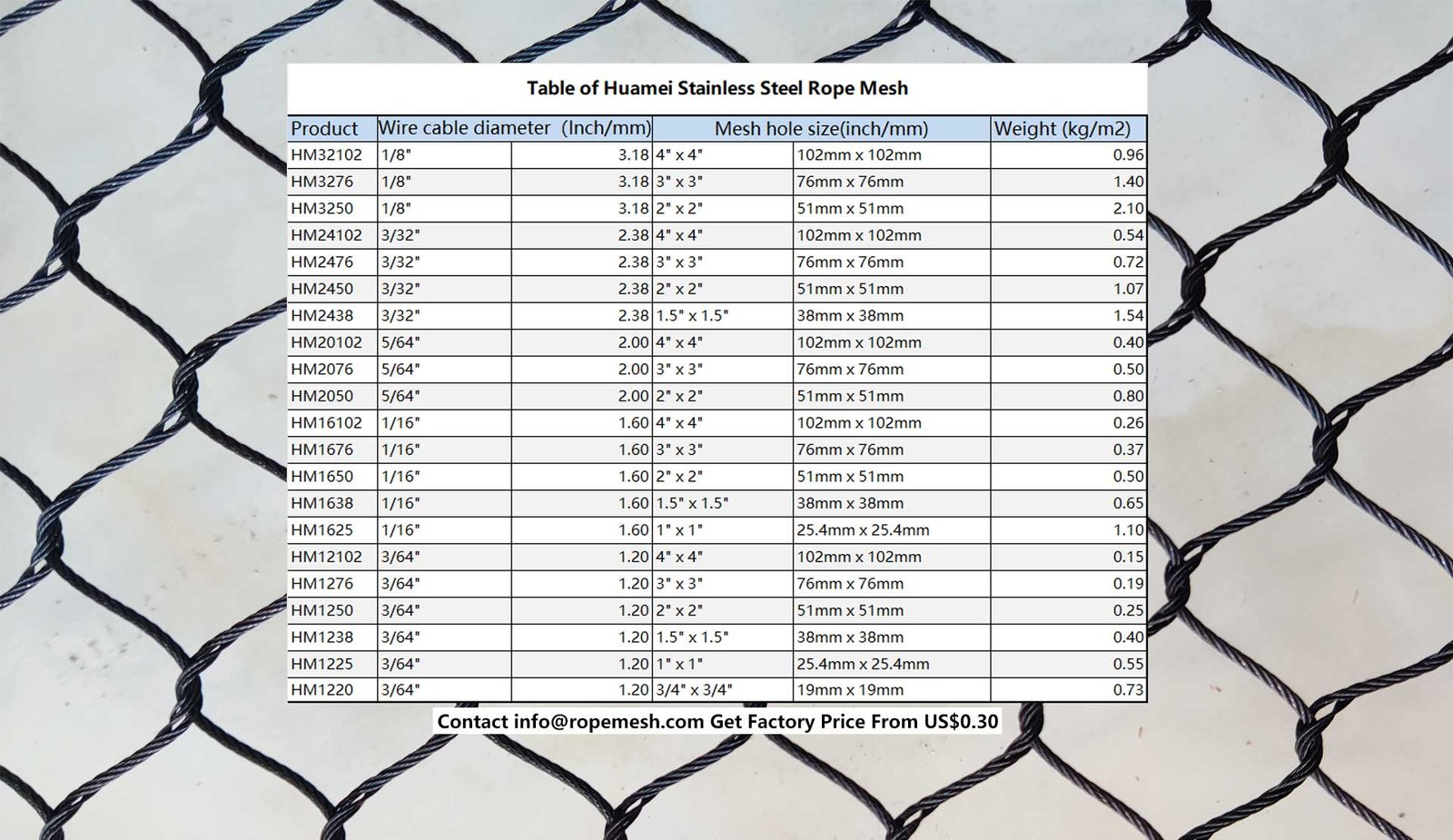
The most fundamental requirement of any zoo enclosure is security. Stainless steel rope mesh delivers this with unmatched reliability. The woven cable construction creates a barrier that can withstand the full force of a charging tiger or the persistent chewing of a bear — without breaking, deforming, or failing. Tensile strength of professional-grade stainless steel rope mesh reaches 1,770 N/mm² minimum, with breaking loads ranging from 0.63 KN to 9.04 KN depending on wire diameter and construction.
Unlike rigid welded panels that crack at weld points under impact, flexible wire rope mesh absorbs and dissipates energy. This shock-absorbing quality is critical for large predators. When a pouncing tiger hits a rigid bar fence, the impact can break bones or cause facial lacerations. When the same animal hits stainless steel rope mesh, the cables flex, absorbing the force and dramatically reducing injury risk. The mesh springs back to its original shape, ready for the next impact.
2.2 Superior Corrosion Resistance
Zoo enclosures live outdoors — rain, snow, humidity, UV radiation, and temperature extremes are constants. Traditional galvanized steel fencing begins rusting the moment its zinc coating is scratched (and animals scratch fences constantly). Plastic-coated mesh degrades under UV exposure within 3–5 years, becoming brittle and chewable.
Stainless steel rope mesh never rusts. The chromium in stainless steel forms a passive oxide layer that self-repairs when scratched, providing permanent corrosion protection. Grade 316 stainless steel — which contains molybdenum — offers enhanced resistance to pitting and crevice corrosion, making it ideal for coastal zoos or environments with high humidity or chemical exposure. This corrosion resistance translates directly to longevity: properly specified stainless steel mesh delivers 30+ years of service life with virtually no degradation.
2.3 Unmatched Flexibility and Design Freedom
One of the most compelling advantages of stainless steel rope mesh is its extraordinary flexibility. The mesh can be shaped, curved, and tensioned to fit virtually any structural frame — from simple rectangular enclosures to complex geometric habitats that follow natural terrain features.
This flexibility enables space-saving designs that rigid fencing simply cannot achieve. The mesh can span large distances without intermediate supports, creating open, airy exhibits that feel expansive rather than confined. It can be installed as overhead netting to prevent climbing escapes, wrapped around rock formations, or suspended between steel arches reaching 12 meters or higher. The design possibilities are limited only by the architect's imagination.
2.4 Exceptional Transparency and Visitor Experience
Perhaps the most visually striking feature of stainless steel rope mesh is its transparency. The fine wire diameter — typically 1.2mm to 4.0mm — combined with the open diamond aperture creates a barrier that virtually disappears to the human eye. Visitors enjoy unobstructed views of animals in their habitats, fostering deeper connection and engagement.
This transparency benefits animals too. The open mesh allows natural light, airflow, and even rain to penetrate the enclosure, creating a more natural environment. Animals can see out and interact with their surroundings without feeling trapped behind solid walls or bars. The result is a more authentic, stress-free habitat that supports natural behaviors.
2.5 Virtually Zero Maintenance
For zoo operators, maintenance costs are a significant and ongoing expense. Traditional fencing requires regular painting, rust removal, weld repair, and eventual replacement. Stainless steel rope mesh eliminates nearly all of this.
Once installed, stainless steel cable mesh requires no painting, no coating, no rust treatment, and no chemical preservation. Occasional cleaning with water and mild detergent is sufficient to maintain appearance. The material is non-porous, resists mold and debris accumulation, and does not degrade from UV exposure. This near-zero maintenance requirement translates directly to lower operational costs, reduced staff time, and fewer disruptions to zoo operations.
3. Material Science and Mesh Types
3.1 Stainless Steel Grades: 304 vs. 316
The choice between stainless steel grades is the single most important technical decision in specifying zoo mesh. Choose wrong, and you'll face premature corrosion, replacement costs, and potential safety failures.
📋 Overview: This table compares the most common stainless steel grades used for zoo enclosures — AISI 304 (cost-effective for inland zoos), AISI 316 (superior corrosion resistance with molybdenum, ideal for coastal/humid climates), and low-carbon variants 304L/316L (optimized for weldability). Use this guide to select the right material for your project’s environment and longevity requirements.
Tip: For most inland zoos, 304 is cost‑effective; choose 316 for coastal or high‑humidity environments to maximize longevity.
Practical guidance: For most inland zoo applications, 304 stainless steel provides excellent performance at a lower cost. However, if your zoo is within several miles of a coastline, experiences high humidity, or uses chemical treatments near enclosures, 316 stainless steel is strongly recommended. The additional upfront investment pays for itself through extended service life and eliminated corrosion-related repairs.
3.2 Wire Rope Construction
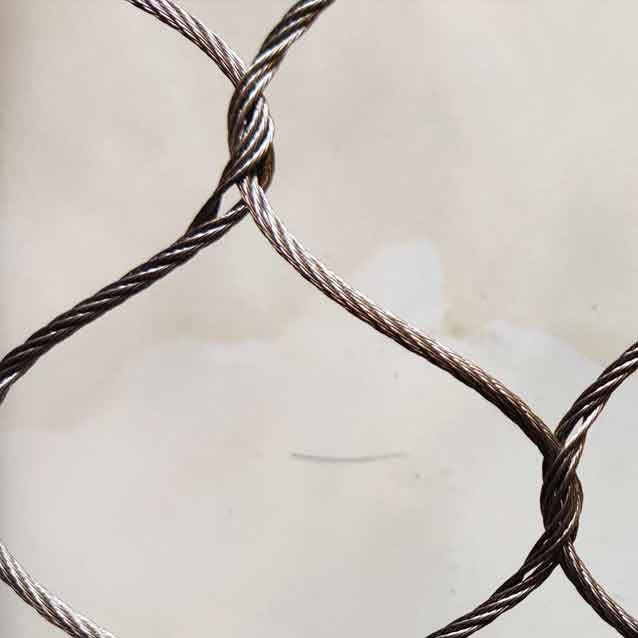
Stainless steel rope mesh is manufactured from wire rope — multiple strands of wire twisted together to form a cable. The construction type affects flexibility, strength, and durability.
📋 Overview: This table compares the three common wire rope constructions used in stainless steel zoo mesh. 7×7 offers semi-rigid stability for standard enclosures; 7×19 provides higher flexibility for complex curves and curved installations; 1×19 delivers maximum stiffness and tensile strength for straight runs and high-load applications. All three are available in diameters from 1.2mm to 3.2mm.
💡 Tip: Choose 7×7 for most standard zoo enclosures; opt for 7×19 if your design involves curved or irregular geometries; use 1×19 for straight, high‑tension cable runs where deflection must be minimized.
3.3 Mesh Weave and Connection Types
Stainless steel rope mesh is manufactured in two primary configurations:
Plain Weave (Knotted Mesh)
In plain weave construction, each warp wire rope crosses alternately above and below each weft wire rope. The ropes are hand-woven through precision molds, creating a flexible, durable structure. Plain weave mesh is popular for its ease of installation and customization, making it suitable for a wide range of applications from small animal enclosures to large aviaries.
Ferrule Connection (Knotless Mesh)
Ferrule-type mesh connects stainless steel ropes using ferrules — small metal sleeves crimped at each intersection. The ferrules, made from the same stainless steel as the ropes, create diamond-shaped apertures and add significant strength and stability to the mesh. This configuration is highly durable, can support heavy loads, and is ideal for large predator enclosures. Ferrule mesh is available in both 304 and 316 stainless steel and can be customized with various wire diameters and aperture sizes.
Key difference: Plain weave offers slightly more flexibility; ferrule connection offers greater structural rigidity and load-bearing capacity. Both are widely used in professional zoo applications.
3.4 Aperture (Mesh Opening) Sizing
Choosing the correct aperture size — the opening between cables — is critical for animal safety. An aperture that's too large creates paw or head entrapment risks. An aperture that's too small reduces visibility and increases material cost unnecessarily.
📋 Overview: This table provides species-specific recommendations for aperture (mesh opening) and wire diameter when selecting stainless steel rope mesh for zoo enclosures. Large predators require larger apertures (51–76mm) with thicker wires (2.4–3.2mm) to prevent paw entrapment while absorbing high-impact forces. Primates need smaller, precise apertures (50mm) to prevent finger/hand entrapment. Birds and small animals use finer mesh (1.2–1.6mm wire) with smaller openings to ensure safe containment without restricting visibility or airflow. Always consult a specialist for species-specific behavioral considerations.
💡 Tip: These are general starting points. Always consult with a mesh supplier and animal behavior expert to fine-tune aperture sizes — especially for species with known climbing, chewing, or pawing behaviors. Paw‑safe design is non‑negotiable for large carnivores.
4. Applications in Zoos and Wildlife Facilities
4.1 Large Predator Enclosures
Lions, tigers, bears, and other large predators require the highest level of security. Stainless steel rope mesh meets this demand with exceptional strength and impact resistance. The paw-safe aperture design prevents entrapment injuries, while the flexible cable construction absorbs impact forces that would break rigid fencing. For tiger enclosures specifically, paw-safe aperture sizing is a critical safety metric — the opening must be small enough that a tiger's paw cannot pass through and become trapped.
4.2 Primate Habitats
Primates are intelligent, curious, and remarkably strong. They climb, swing, and test enclosure boundaries constantly. Stainless steel rope mesh provides the security needed while offering the transparency that allows visitors to observe natural primate behaviors. The mesh can be shaped to follow tree canopies and rock formations, creating immersive habitats that support natural climbing and social behaviors.
4.3 Aviaries and Bird Enclosures
Bird aviaries benefit enormously from stainless steel rope mesh. The open, transparent structure allows birds to fly freely while maintaining secure containment. The corrosion resistance is particularly valuable in humid aviary environments, and the smooth, burr-free surfaces prevent feather damage and injury. Aviary mesh is typically manufactured with smaller wire diameters (1.2mm–1.6mm) and finer apertures to contain smaller species.
4.4 Mixed-Species Exhibits
Modern zoos increasingly design mixed-species exhibits that house multiple species together. Stainless steel cable mesh for animal exhibits accommodates these complex designs with custom aperture sizing that safely contains the smallest species while withstanding the largest. The mesh can be configured with different opening sizes in different sections of the same enclosure, creating versatile habitats that meet diverse species requirements.
4.5 Safety Barriers and Visitor Protection
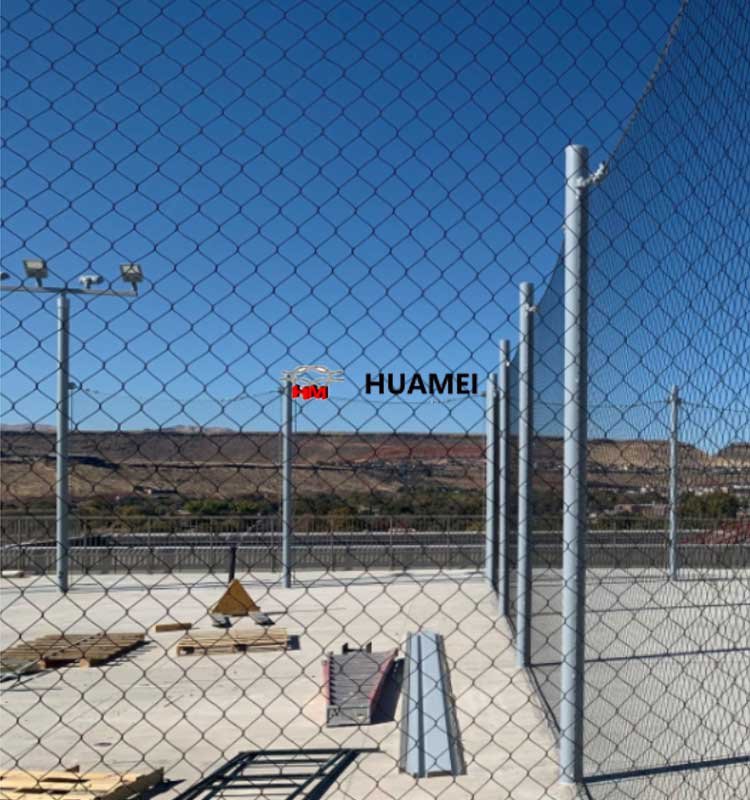
Beyond animal containment, stainless steel rope mesh serves as safety barriers between visitors and exhibits. The mesh provides a secure physical barrier while maintaining clear sightlines for photography, observation, and education. The material's aesthetic appeal — available in natural silver or black oxide finish — integrates seamlessly with zoo architecture and landscaping.
4.6 Overhead Netting and Climb Prevention
Many species — particularly primates and big cats — are skilled climbers. Stainless steel rope mesh can be installed as overhead netting to prevent escape through the top of enclosures. The lightweight yet strong mesh spans large areas without sagging, creating secure "sky ceilings" that allow natural light and weather to enter while keeping animals safely contained.
To see real-world installations, check out our zoo mesh big-cat enclosure project.
Provides high-quality stainless steel rope mesh with factory price
5. Selection and Installation Guide
5.1 How to Choose the Right Mesh
Selecting the correct stainless steel rope mesh for your zoo enclosure requires careful consideration of several factors:
1. Animal Species and Size
The most critical factor. Large predators require larger wire diameters (3.0mm–4.0mm) and smaller apertures to prevent paw entrapment. Birds require finer mesh with smaller apertures. Always consult species-specific guidelines and work with experienced mesh suppliers.
2. Environmental Conditions
Consider your zoo's climate. Coastal or high-humidity locations demand 316 stainless steel for maximum corrosion resistance. Inland zoos with moderate conditions can use 304 stainless steel effectively.
3. Enclosure Design and Geometry
Complex shapes and curves benefit from more flexible 7×19 construction. Straight runs and simpler geometries can use 7×7 construction. Consider whether overhead netting, curved transitions, or custom fittings are required.
4. Budget and Longevity Goals
While 316 stainless steel has a higher upfront cost, it offers superior longevity in challenging environments. Factor in the 30+ year service life and zero maintenance requirements when calculating total cost of ownership.
5. Aesthetic Preferences
Stainless steel mesh is available in natural silver finish or black oxide coating. Black oxide reduces visibility further, making the mesh nearly disappear against dark backgrounds — ideal for immersive exhibits.
5.2 Installation Best Practices
Proper installation is essential for safety, durability, and performance. Follow these guidelines:
Preparation:
- Accurately measure the enclosure area to ensure mesh fits the frame
- Verify mesh size matches frame dimensions
- Gather all necessary accessories: stainless steel fittings, wire ropes, ferrules, cable ties, and tensioning tools
Installation Steps:
- Establish anchor points on the enclosure structure using bolts or welded attachments
- Stretch the mesh evenly across the frame, with assistance to maintain even tension
- Secure corners with cable ties, working from top to bottom
- Maintain even tension on both sides simultaneously to keep mesh holes properly shaped
- Trim excess mesh at the bottom using wire clamps
- Secure edges with stainless steel clips
- Reinforce connections with larger-diameter wire rope for additional durability
- Remove temporary cable ties, leaving only permanent fixtures
- Smooth any sharp or uneven areas with a grinding machine
Important: The recommended unfolding angle for the mesh is 60 degrees. All rope-to-net connections must be tight with no protrusions. Wear gloves during installation to prevent injury.
5.3 Maintenance and Inspection
While stainless steel rope mesh requires virtually no maintenance, regular inspection is still important for long-term safety.
Recommended Inspection Schedule:
- Monthly: Visual inspection for debris accumulation; clean with water and mild detergent if needed
- Quarterly: Check tension levels, connector firmness, and surface condition
- Annually: Comprehensive inspection for broken wires, loose ferrules, damaged fasteners, or abnormal deformation
Cleaning Guidelines:
- Use mild detergent and water with a soft brush for routine cleaning
- Avoid harsh chemicals or abrasive cleaners that can damage the passive oxide layer
- For stubborn stains, use a stainless steel wire brush followed by oil application
- Apply oil to the rope mesh every 4 months using hot oil (approximately 50°C) to penetrate the rope core
Service Life: Properly specified and maintained stainless steel rope mesh typically lasts over 20–30 years. At end of life, the material is 100% recyclable.
6. Conclusion: The Ideal Choice for Modern Zoos
Before selecting a mesh, review our complete stainless steel rope mesh specifications.
Stainless steel rope mesh represents a fundamental advancement in zoo enclosure design — one that successfully balances the three competing demands of modern zoological facilities: animal welfare, visitor experience, and operational efficiency.
For animal welfare, the mesh provides a safe, injury-free environment. The flexible cable construction absorbs impact forces that would break bones on rigid fencing. The smooth, burr-free surfaces prevent lacerations and abrasions. The open structure allows natural light, airflow, and weather to enter, creating habitats that support natural behaviors rather than confining animals in dark, sterile cages.
For visitor experience, the near-invisible transparency delivers unobstructed views that foster genuine connection between people and animals. Visitors can observe natural behaviors without the visual intrusion of heavy bars or opaque walls. This transparency enhances education, photography, and the emotional impact that drives conservation support.
For enclosure safety design, read how zoo fencing improves animal safety.
For operational efficiency, the 30+ year service life and virtually zero maintenance requirements eliminate the endless cycle of rust repair, repainting, and replacement that plagues traditional fencing. Zoo operators save thousands of dollars annually in maintenance costs and countless staff hours. The material is 100% recyclable at end of life, supporting sustainability goals.
The upfront investment in stainless steel cable mesh for animal exhibits is more than justified by the long-term savings, enhanced visitor engagement, and superior animal welfare it delivers. It's not just a fencing material — it's a strategic investment in the future of your zoo.
When you specify stainless steel rope mesh for your next enclosure project, you're choosing a solution that has been proven in zoos worldwide, endorsed by industry leaders like WAZA, and trusted by the world's most respected zoological institutions. You're choosing security without sacrifice, transparency without compromise, and durability without endless maintenance.
That's the promise of stainless steel rope mesh. And that's why it's the gold standard for modern zoo enclosures.
7. Frequently Asked Questions
📋 Summary
What it is: Stainless steel rope mesh is a woven cable netting system — available in grades 304 and 316 — used to build secure, transparent, and low-maintenance animal enclosures in zoos and wildlife sanctuaries worldwide.
Why it matters: Traditional fencing materials (chain-link, welded wire, coated plastics) rust, break, injure animals, and require constant replacement. Stainless steel rope mesh delivers 30+ years of service life with virtually zero maintenance while providing unobstructed visitor sightlines and impact-absorbing flexibility that protects both animals and guests.
Who needs it: Zoo directors, facility managers, exhibit designers, procurement specialists, and wildlife sanctuary operators planning new enclosures or renovating existing ones.
Key takeaway: Stainless steel cable mesh for animal exhibits isn't just a fencing material — it's a fundamental upgrade in how zoos balance animal welfare, visitor experience, and operational efficiency. The upfront investment pays for itself many times over through eliminated maintenance costs, enhanced guest engagement, and superior animal safety.
🔗 Back to: Zoo Enclosures — Complete Guide
📋 Ready to start your project?